Living in Shared Spaces: New Study Shows How Great Apes Adapt to Humans
James Peng
Professor Joseph Feldblum
Living in Shared Spaces: New Study Shows How Great Apes Adapt to Humans
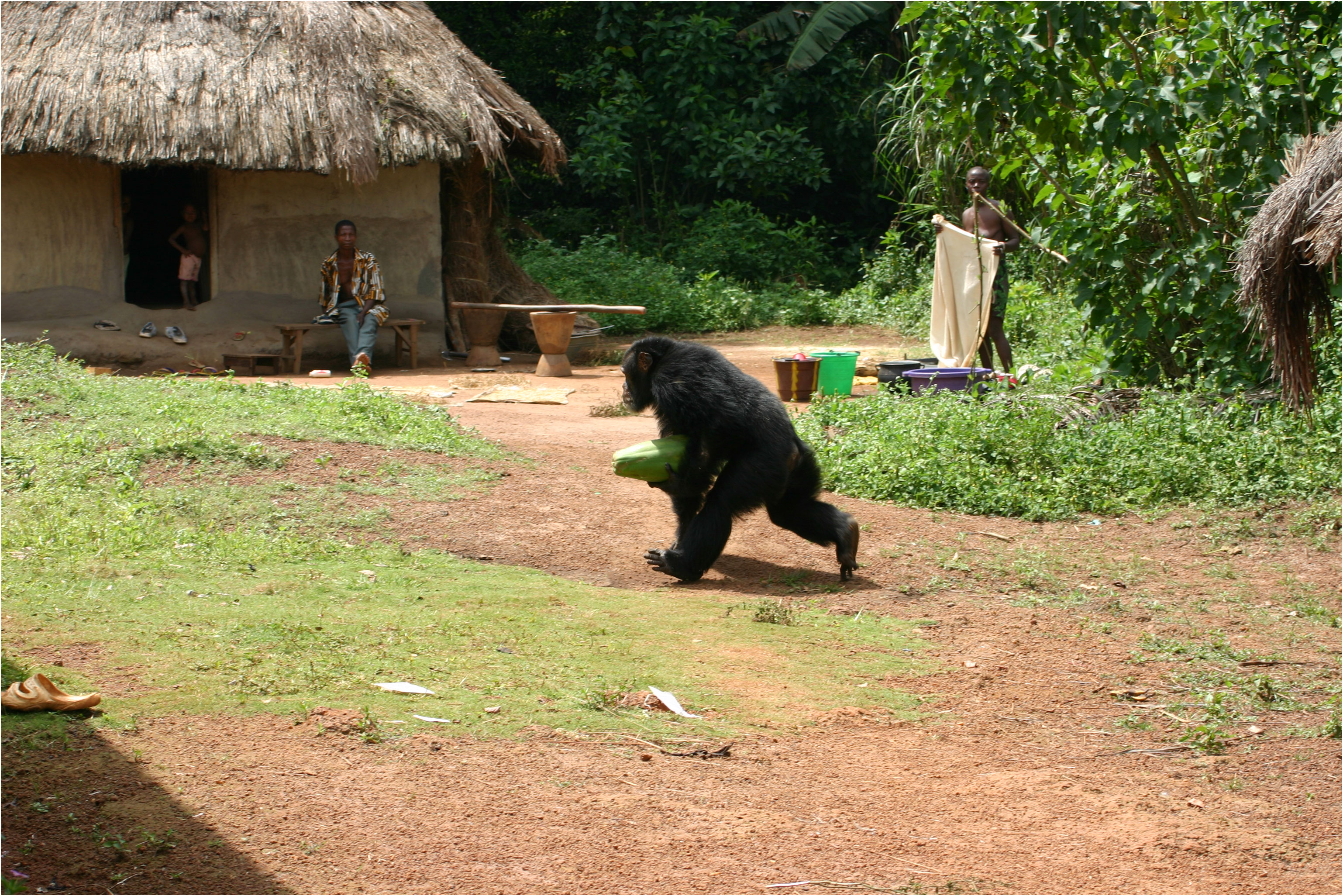
A chimpanzee stealing crops from a village
Across the world, human activities such as agriculture, logging, and mining are reshaping the landscapes and the forests that great apes inhabit. Because of forests being cleared for palm oil, timber, and roads, habitat fragmentation is one of the primary drivers of population decline for great apes, especially considering that they are found in developing countries. For instance, in Indonesia, orangutan habitats have been replaced by oil palm plantations. Meanwhile, mining in Africa has led to frequent unfriendly interactions between gorillas and humans. Conservationists have long warned about the consequences of habitat loss. However, Dr. Ammie K. Kalan from the University of Victoria published a study analyzing how the great ape species are changing their behavior in response to human activity.

An Orangutan shot by palm oil farmers
They analyze 96 studies (most analyzing chimpanzees) that show apes are adapting their behaviors despite challenges with habitat loss. Activities include crop foraging, nesting in new locations, and using roads or human-made trails to travel are observed. Some behaviors, such as altered nesting patterns, may help apes avoid human conflict. But others, like crop raiding, can lead to bad conflicts, where apes are killed as pests. Nevertheless, increased proximity to humans has led to stress, injury, and even deaths in many ape populations. While some adaptive behaviors may help apes survive in the short term, they often expose them to new dangers originating from humans.
The study also analyzes the human perspective of the issue. 62% of the studies included local human views on ape behavior. These perspectives ranged from brief mentions of hunting practices to detailed accounts of cultural beliefs and community attitudes. Over half of these studies focused on crop foraging, revealing that such behaviors are reshaping human–ape relationships, sometimes weakening traditional protections and increasing fear or conflict, particularly toward chimpanzees and orangutans.
Nevertheless, the authors reinforce that the ability of great apes to adapt to human presence should not be the justification for their habitat loss. Additionally, this study again highlights the role of community education in primate conservation: as human-ape interactions become more frequent, how can we avoid conflicts? To do this, conservationists need to take a more local approach that combines ecological science with cultural understanding.


Comments
Post a Comment